
1.Brief introduction of product
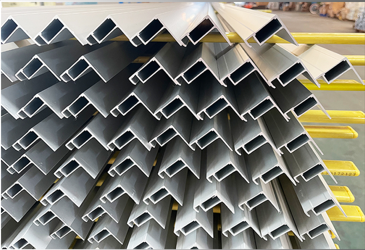
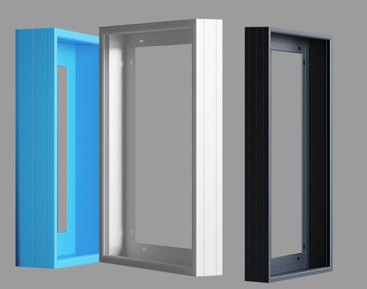
The solar border is an important component specially designed to support and protect solar panels.
2.Main Technical Parameters
2-1. Materials:
2-1-1. 6063 aluminum alloy: It has good extrusion performance, weldability and corrosion resistance, and its comprehensive performance is relatively excellent.
2-1-2. 6005 aluminum alloy: It has relatively high strength and good corrosion resistance as well.
2-1-3. 6061 aluminum alloy: It has good strength, and also has good processing performance and fatigue resistance.
2-2.Size Specifications:
2-1-1.Length: 2278*1134/2465*1134/2384*1303, etc.
2-1-2.Width: 30*30/30*10.75/30*25/35*28
2-1-3.Thickness: 8.0/7.2/6.5/6
2-3.Border cross - sectional shape:
2-3-1.C - type: It is shaped like the letter "C" and has a certain strength and stability.
2-3-2. U - type: It is in a "U" shape and can better wrap and fix solar panels.
2-3-3."几" - type (similar to the Chinese character "几"): The overall appearance is similar to the Chinese character "几", providing relatively stable support.
2-4.Rectangular type: The cross - section is rectangular, the structure is relatively regular, and the strength is good.
2-5.Surface treatment:
Such as sandblasting, electrophoresis, oxidation, etc. Specific treatment methods and film thickness
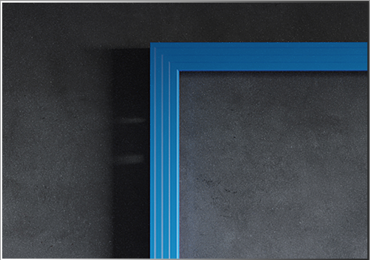
2-6.Color: Standard color or customizable color
2-7.Film thickness:
The film thickness of solar aluminum borders is usually between 8 - 25μm. The difference in film thickness mainly depends on the use environment, protection requirements and other factors. A thicker film layer can provide better protection against corrosion and weathering.
2-8.Alloy grades:
2-8-1.Commonly used alloy grades include 6005 - T5, 6063 - T5, 6063 - T6, etc.
2-8-2.The 6005 - T5 alloy has good mechanical properties and processing properties and is suitable for the manufacture of solar borders.
2-8-3. The 6063 - T5 alloy has good extrusion performance, can meet the forming requirements of solar aluminum borders, and has a good balance in strength and corrosion resistance.
2-8-4.The 6063 - T6 alloy has undergone artificial aging treatment and has high strength, which can improve the stability and reliability of solar aluminum borders in actual use.
2-9.The commonly used alloy grades for solar aluminum borders are 6063 and 6005. Their compositions are as follows:
2-9-1.• Silicon (Si): The content is between 0.2% - 0.6%. The addition of silicon can improve the casting performance and processing performance of the alloy and increase the strength and corrosion resistance of the alloy.
2-9-2.•Iron (Fe): The content does not exceed 0.35%. Iron is an impurity component in the alloy, and if the content is too high, it will reduce the mechanical properties and corrosion resistance of the alloy.
2-9-3. • Copper (Cu): The content does not exceed 0.1%. Copper can increase the strength of the alloy, but if the content is too high, it will affect the welding performance and corrosion resistance of the alloy.
2-9-3. • Manganese (Mn): The content is around 0.1%. Manganese can increase the strength and corrosion resistance of the alloy and can also improve the processing performance of the alloy.
2-9-4.•Magnesium (Mg): The content is between 0.45% - 0.9%. Magnesium is the main strengthening element in the 6063 alloy, and the Mg₂Si phase formed with silicon can significantly increase the strength of the alloy.
2-9-5.• Chromium (Cr): The content does not exceed 0.1%. Chromium can increase the corrosion resistance and antioxidant property of the alloy.
2-9-6.• Zinc (Zn): The content does not exceed 0.1%. Zinc is an impurity component in the alloy, and if the content is too high, it will reduce the corrosion resistance of the alloy.
2-9-7.• Titanium (Ti): The content does as not exceed 0.1%. Titanium can refine the grains of the alloy and increase the strength and toughness of the alloy.
2-9-8.• Aluminum (Al): The rest is aluminum, and the content is between 97.35% - 98.35%.
6005 alloy:
2-9-9.• The silicon content is higher than that of the 6063 alloy, which makes the 6005 alloy have higher strength but a decreased elongation rate. The specific silicon content range may vary depending on the manufacturer and specific requirements, but it is generally around 0.6% - 0.9%.
2-9-10.• The magnesium content is slightly lower than that of the 6063 alloy, approximately between 0.4% - 0.6%. Magnesium is also an important alloy element in the 6005 alloy, and it has an important influence on the strength and corrosion resistance of the alloy in cooperation with silicon.
2-9-11.• The contents of iron, copper, manganese, chromium, zinc, titanium and other elements are similar to those of the 6063 alloy, and all have corresponding limit ranges to ensure the performance of the alloy.
3.Performance Indicators
3-1.Mechanical strength: It can withstand a certain amount of external force impact and pressure, ensuring that the border is not easily deformed or damaged during installation and use.
3-2.Corrosion resistance: It can resist corrosion factors in the external environment, such as rainwater, air pollutants, etc., ensuring the stability of long - term use.
3-3.Sealing performance: There is a good seal between it and the solar panel to prevent water vapor, etc. from entering and affecting the performance of the panel.
3-4.Wind resistance performance: It can maintain structural stability in a windy environment and not be blown down or damaged.
3-5.Heat dissipation performance: It helps the panel to effectively dissipate heat, avoiding overheating and affecting the efficiency and life.
3-6. Electrical insulation performance: It prevents leakage and other situations from occurring.
3-7. Dimensional accuracy: It ensures an exact match with the panel, making installation convenient and firm.
3-8.Aging resistance performance: It can still maintain stable performance when exposed to the outdoor environment for a long time.
4.Installation Characteristics
4-1. Installation methods:
4-1-1. Snap connection:
There is a snap structure designed on the border, which is snapped together with the corresponding installation parts to achieve fixation.
4-1-2.Strip fixation:
Use a strip to press the border tightly on the installation base, and then use screws, etc. for fastening.
4-1-3.Welding fixation:
In some specific situations, the border may be welded to other parts.
4-1-4.Slot - type installation:
Here are slots on the border corresponding to the installation parts, and it is installed and fixed by directly inserting. -
4-2. Connection parts:
4-2-1.Corner brackets: Used for the connection and reinforcement of the border corners.
4-2-2.Middle struts: The parts connecting adjacent borders in the middle. -
4-3.Accessories:
4-3-1.Screws: Such as stainless steel screws, used to fix the border to other parts.
4-3-2.Nuts: Used in cooperation with screws.
4-3-3.Washers: They play a role of buffering and fastening.
4-3-4.Rivets: In some cases, they are used for connection.
4-3-5.Sealing strips: Ensure the seal between the border and the solar panel.
4-4.Installation bracket accessories: Such as bracket connectors, adjusters, etc., used to install and fix the border to the support structure.
5.Quality Standards -
5-1.:Mechanical performance:
The strength and stiffness must meet certain requirements and can withstand a certain amount of external force without obvious deformation or damage. external force without obvious deformation or damage. The impact resistance performance is good.
5-1-1.Dimensional accuracy: The dimensional tolerance should be within the specified range to ensure a good fit with the solar panel.
5-1-1-1.Surface quality:
The coating should be uniform and complete, without obvious defects such as bubbles, scratches, peeling, etc.
5-2-1.The surface smoothness meets the requirements.
5-2-1-1.Corrosion resistance:
It has good anti-corrosion ability and can be stably used for a long time under different environmental conditions.
5-2-1-2.Connection performance:The connection parts should be firm and reliable, and the connection method is reasonable.
5-2-1-3.Sealing performance:There is a good seal at the junction with the panel to prevent water vapor, etc. from entering.
5-2-1-4.Environmental performance:The materials should meet environmental requirements and be friendly to the environment.
5-2-1-5.Reliability and durability: :The performance remains stable within the specified service life.
- Packaging and Transportation
6-1.Packaging methods:
6-1-1.Wooden box packaging: Place the borders neatly in a specially made wooden box, which plays a good role in protection and fixation.
6-1-2.Pallet packaging: Place the borders on a pallet and then take measures such as bundling or film covering for protection.
6-1-3.Carton packaging: Applicable to smaller batches or short - distance transportation, wrap with a suitable carton.
6-1-4.Bubble film packaging: Wrap a layer of bubble film on the surface of the border to play a buffering protection role, and it can be used in combination with other packaging methods.
6-1-5.Wrapping film packaging: Wrap the border, which can prevent dust and scratches, and is often used in combination with other methods.
6-2.Transportation requirements:
6-2-1. Stable packaging: Ensure that the packaging is firm and can effectively protect the border from being damaged by collision, wear, etc. during transportation.
6-2-2. Moisture - proof and humidity - proof: Take appropriate measures to prevent the border from being affected by moisture or being soaked by water during transportation.
6-2-3. Avoid heavy pressure: Avoid excessive stacking pressure to prevent the border from being deformed.
6-2-4. Selection of transportation tools: Select appropriate transportation tools such as trucks, containers, etc. according to the transportation distance and conditions to ensure the smoothness of transportation.
6-2-5. Fixing measures: Reasonably fix the border in the transportation tool to prevent shaking and shifting.
6-2-6. Suitable environment: Avoid transporting in extreme temperatures, bad weather, etc. to avoid affecting the quality of the border.
6-2-7. Clear identification: There should be clear identification on the packaging, including fragile identification, product information, etc.
6-2-8. Route planning: Select a route with good road conditions to reduce the impact of bumps on the border.
6-2-9.Tracking and monitoring: Real - time monitor the transportation process so that problems that may occur can be dealt with in a timely manner.
7.Environmental Adaptability
7-1.Working temperature range:
7-1-1.Outdoor exposure: Long - term exposure outdoors, subjected to direct sunlight, wind and rain erosion, temperature changes, etc.
7-1-2.Large temperature changes: May experience large temperature fluctuations from extremely cold to high temperature.
7-1-3.Diverse humidity: May be in a relatively dry environment or in an area with high humidity.
7-1-4.Wind and sun exposure: Subjected to wind force and ultraviolet radiation.
7-1-5.May have sand and dust: In some areas, may be affected by sand and dust particles.
7-1-6.Acid rain and other corrosive environments: In some areas, there may be acid rain and other corrosive environmental conditions.
7-1-7.Humidity adaptation range:
Solar borders usually need to adapt to a relatively wide range of humidity environments. Generally, it should be able to work normally in an environment with a relative humidity of 10% to 90% without significant performance degradation or damage.
However, in some high - humidity environments accompanied by corrosive factors, the corrosion resistance requirements for the border will be higher to prevent rust and other adverse situations caused by long - term exposure to moisture. At the same time, in extremely dry environments, attention should also be paid to the possible embrittlement of the border material. The specific humidity adaptation ability also varies depending on the material and process of the border.
8.Other Characteristics
8-1. Fire resistance performance: The fire resistance performance of solar borders is very important. Generally, high - quality solar borders should have a certain flame retardant ability to reduce the risk of fire spread when a fire occurs.
Usually, it is required that when solar borders encounter an open flame or high temperature, they are not easily burned, and the burning speed is slow, and no large amount of toxic smoke is produced. The specific fire resistance performance standards may vary depending on different regions, application scenarios and relevant regulations. Some common fire resistance performance test standards are used to evaluate the fire resistance ability of solar borders to ensure that they can meet safety requirements in actual use.
8-2. Warranty period:20 years
9.Alloy & Chemical composition
|
Mg |
Si |
Fe |
Cu |
Zn |
Mn |
Cr |
Ti |
Others |
Al |
|
|
6063-T5 |
0.45-0.9 |
0.2-0.6 |
≤0.35 |
≤0.1 |
≤0.1 |
≤0.1 |
≤0.1 |
≤0.1 |
